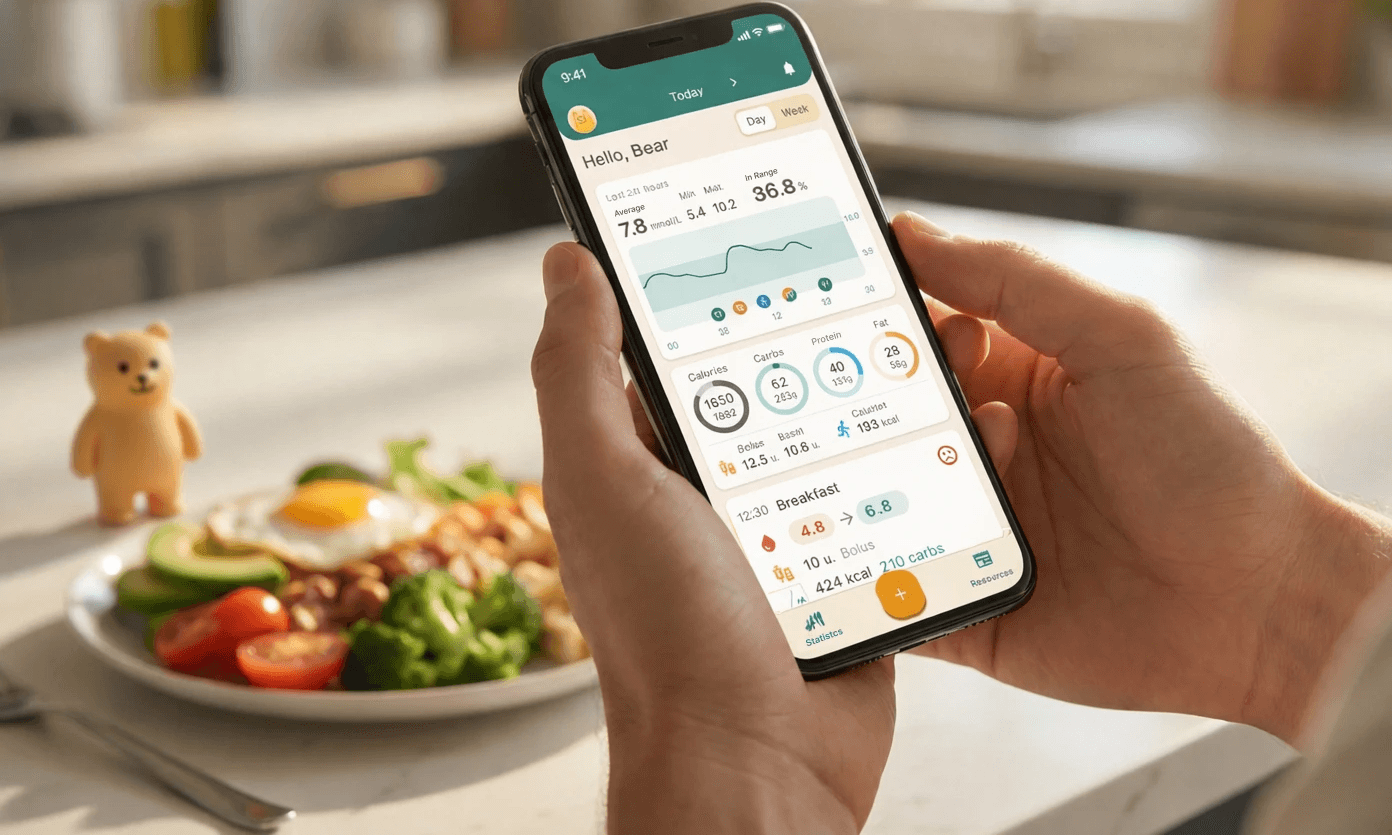
Diabetes App & Platform
ROLE
Product Designer / Co-founder
ORG
Glurry
TIMELINE
2024 Nov -
Building a healthcare product under real-world constraints, balancing medical safety, business viability, and product focus.
OWNERSHIP
As a co-founder, I led the product direction by defining what the product should be, which features to include, and how the system should work.
While working with engineers, I was responsible for:
shaping the product scope
making trade-offs across medical, business, and user needs
defining the system logic and interaction mode
CONTEXT
Starting point: a research-driven concept without a defined product
The project originated from a research collaboration between Tallinn University and Tallinn Children’s Hospital, but the product was not defined upfront and was later redefined from scratch to address real-world constraints.
KEY PRODUCT DECISIONS
Product direction was shaped through continuous validation across users, medical stakeholders, and business programs.
01
Reframing automation under medical constraints
Automation increased regulatory complexity and medical risk
We initially believed we could outperform existing products by making the experience more automated, such as calculating insulin dosage from food input or integrating with insulin pumps.
However, these directions introduced significant regulatory and implementation constraints:
The product would fall under MDR IIb classification
Integration with insulin pump systems is highly restricted
Medical risk exceeded what an early-stage startup could reasonably support
Shifted away from automation-heavy features and removed direct medical intervention capabilities
02
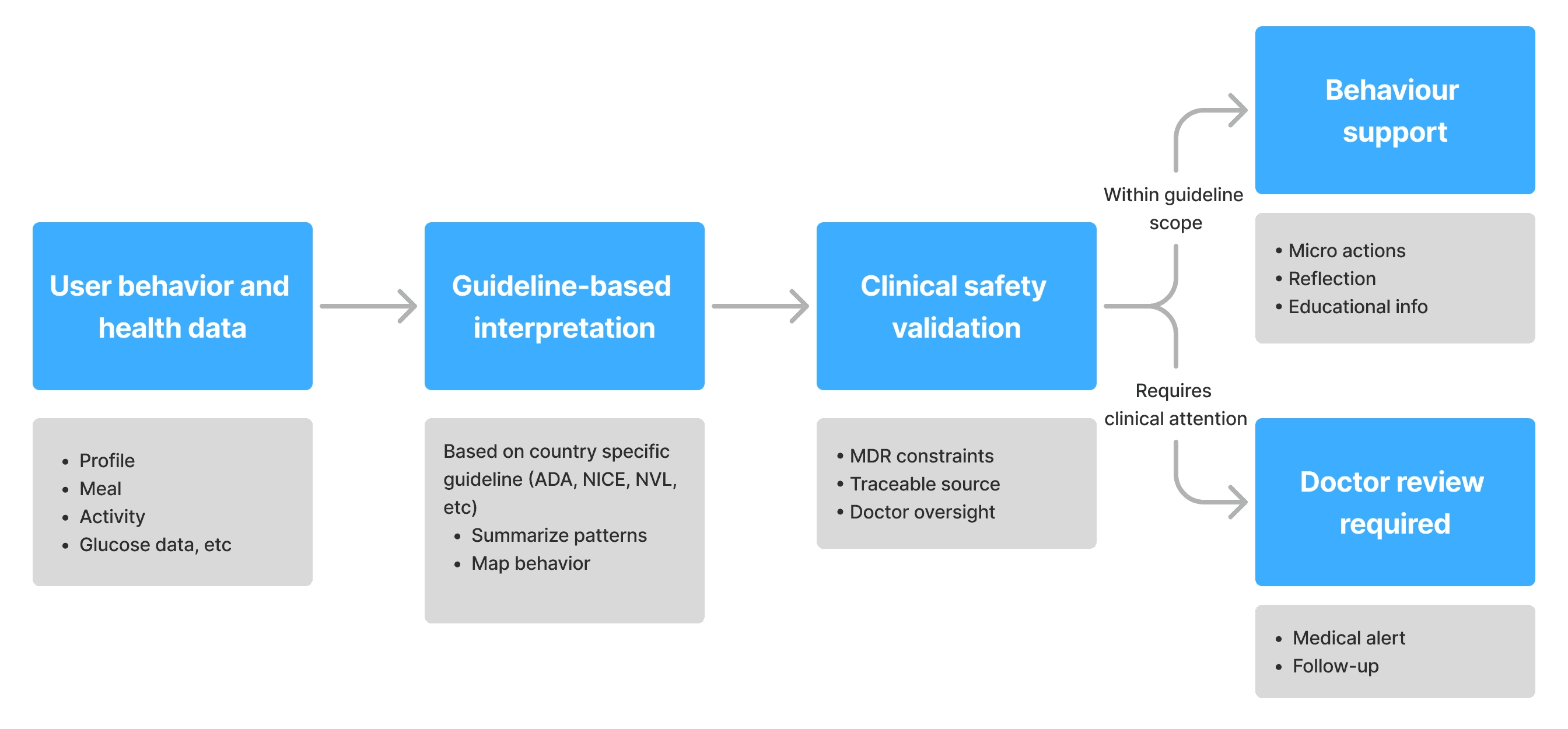
Designing transparent AI-assisted workflows
AI outputs needed to remain explainable and clinically traceable
We explored AI-assisted recommendations and automated goal-setting workflows.
However, ongoing validation revealed that healthcare workflows required:
doctor oversight for medical decisions
access to underlying raw data
recommendations grounded in traceable medical guidelines
AI was repositioned as a support layer rather than an autonomous decision-maker.
The system generated structured summaries for doctors, while recommendations shown to users remained grounded in verifiable guideline-based information with traceable sources.
03
Narrowing the product scope for scalability
Market realities reshaped both the target users and product focus.
The original concept focused on Type 1 diabetes children and included several lifestyle and automation-related ideas. However, ongoing validation revealed challenges around market size, implementation complexity, and long-term scalability. Features were therefore prioritized based on validated user needs, business viability, and product focus.
Reframing the product direction
Early Direction
Type 1 diabetes children
Insulin calculation
Parent-child workflow
Automation-focused interactions
Redefined Product Direction
Type 2 & prediabetes users
Meal behavior & prevention
Doctor-supported workflows
Reduced medical-risk automation
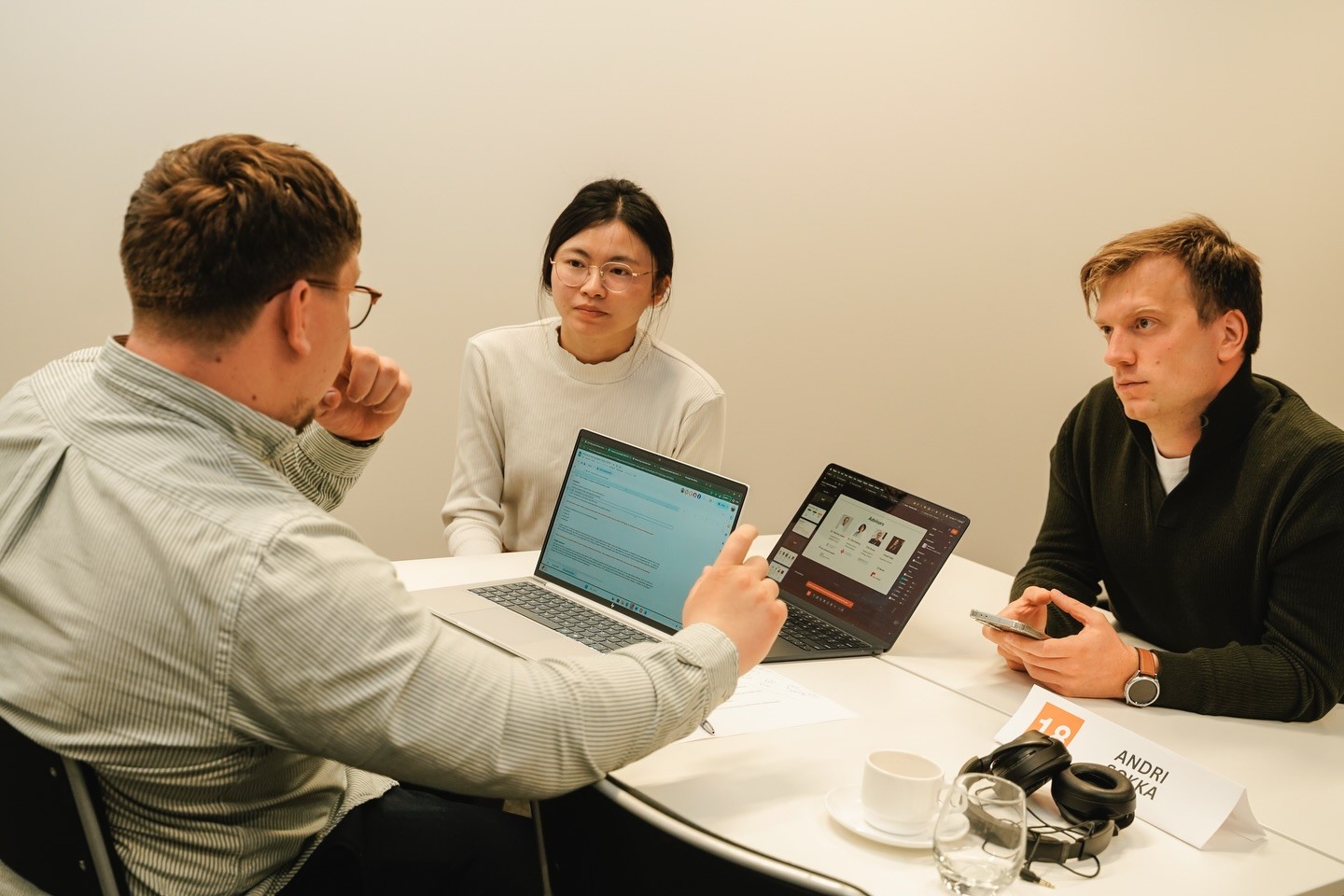
Product decisions were shaped through ongoing conversations with healthcare founders, doctors, accelerators, and business programs.
Pivoted toward Type 2 and prediabetes users, focusing on meal behavior, prevention, and long-term habit support.
04
Accelerating validation through interactive prototyping
Faster feedback loops improved decision-making
Interactive prototypes and AI-assisted prototyping tools such as Figma Make were used to communicate concepts with doctors and stakeholders more effectively.
This enabled faster iteration and more realistic validation before implementation.
The platform was build without developers envolvment as a tool to validate with doctors
OUTCOME
Establishing a viable and validated product direction
Increased partner interest and collaboration opportunities
Selected as Top 12 in Germany Medical Innovations Incubator (4C Accelerator)
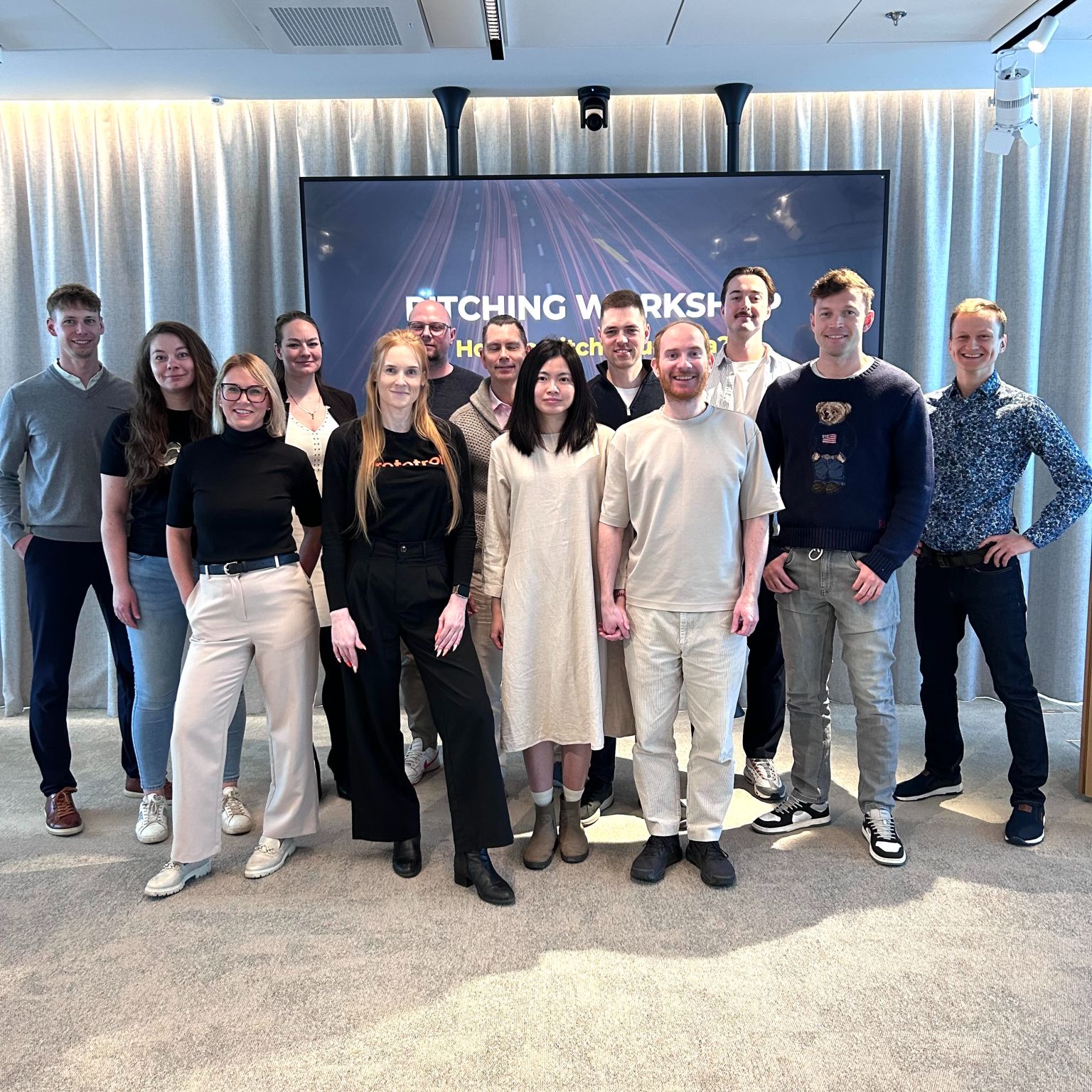
Selected by Health Founders Estonia & Prototron to pitch at Latitude59
The product continues to evolve, shaped by ongoing validation across medical, business, and user perspectives.